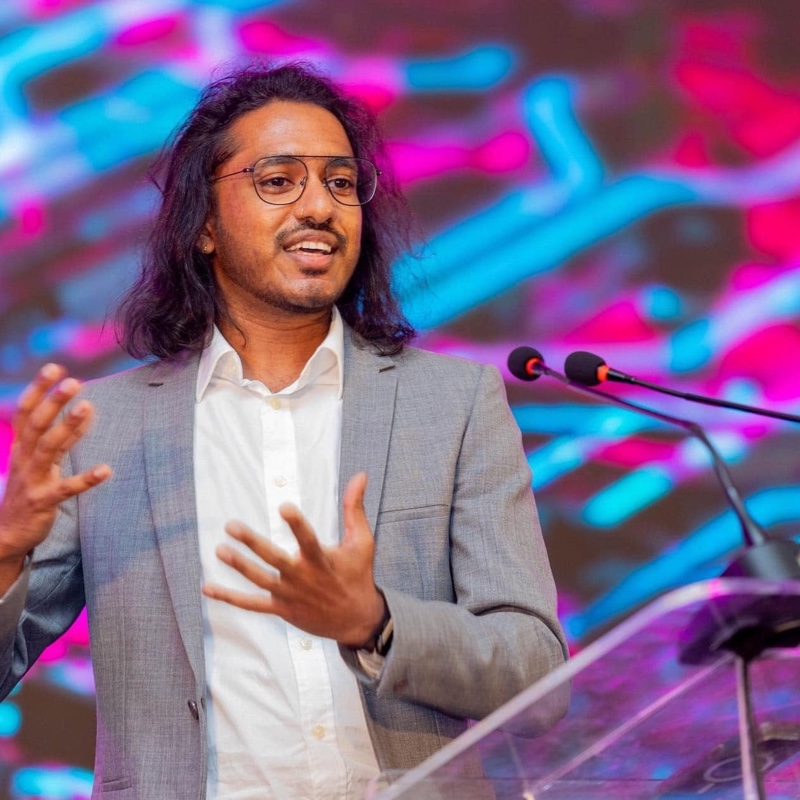
Human Skills for an AI World — a panel at IRAI 2026

9 minute read

Published:

Last week I had the great pleasure of joining the panel “Human Skills for an AI World” at the IEEE International Conference on Responsible AI (IRAI 2026), alongside Lily Ballot Jones, Karine O’Donnell, and Behnam Forouhandeh. Special thanks to Shalinka Jayatilleke for organising and chairing the session.
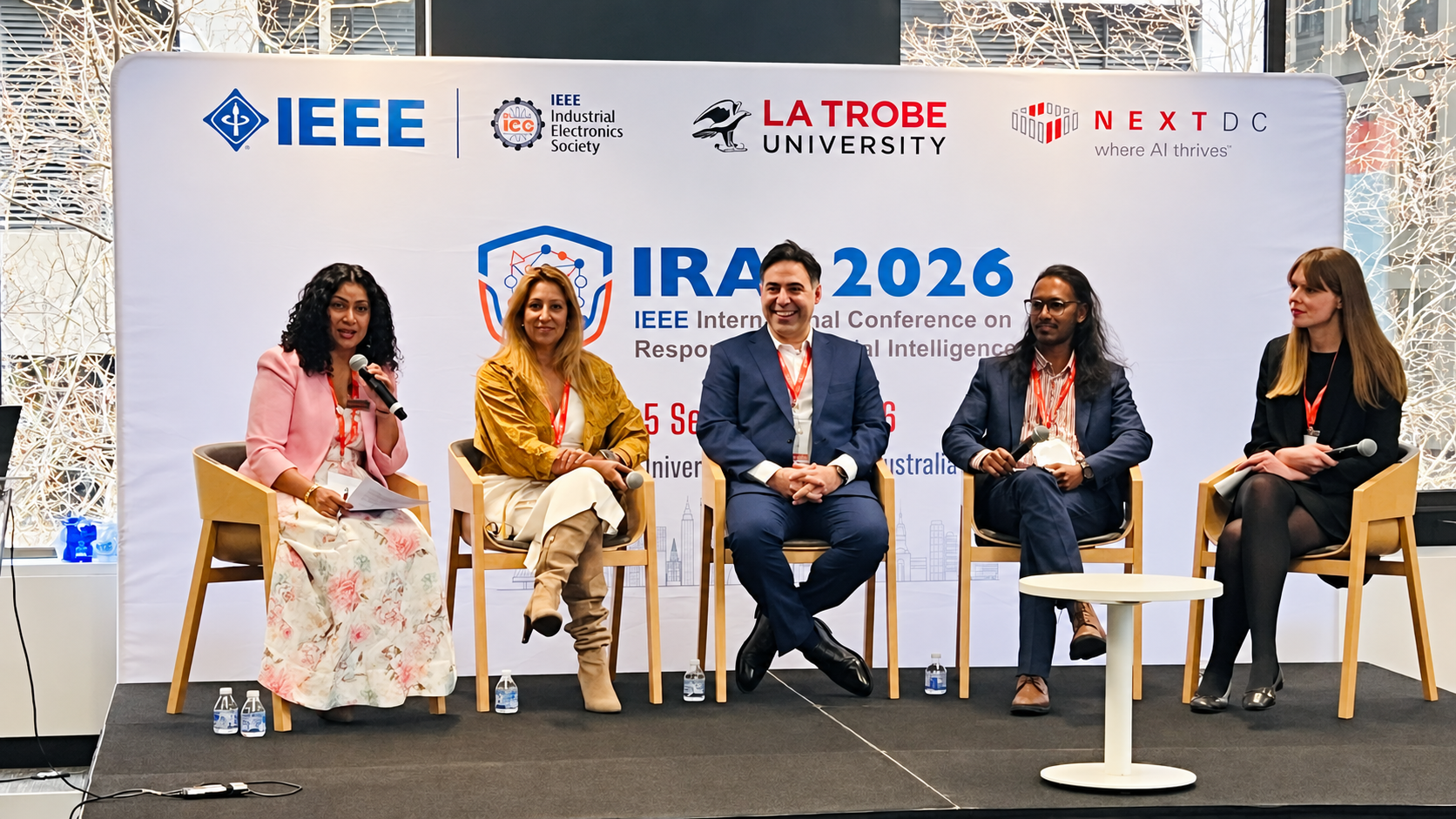
The 'Human Skills for an AI World' panel on stage at IRAI 2026
On the "Human Skills for an AI World" panel at IRAI 2026.

A panel moves quickly, and there is only so much you can say in the room. So I wanted to set down, at a little more length, the threads I kept coming back to.

What does sustained AI use do to our skills?

The honest answer is that we do not know yet. It is worth sitting with that discomfort rather than rushing past it. The strongest long-run evidence we have on technology and the mind actually points the other way — engaging with new tools has been associated with protection against cognitive decline. But those were tools that demanded new effort. Large language models are different: they are the first domain-general technology that removes the effortful step altogether. That makes this a genuinely new kind of exposure, and old evidence is a poor guide to it.

Here is the thread I kept returning to. The tasks we offload to AI the most — writing and retrieval — are not obviously the same as the capacities that look most vulnerable. When I stop drafting and start accepting, when I ask for the answer instead of generating it myself, I am bypassing exactly the kind of effortful practice that seems to matter for encoding and recall. I have taken to calling this cognitive bypassing or offloading — the small, repeated decision to let the machine do the part that used to be mine to do.

I want to be careful about how far I push this. There is real evidence worth taking seriously. A multicentre study in The Lancet Gastroenterology & Hepatology found that clinicians who had grown used to AI assistance detected fewer adenomas when the assistance was removed — a practised skill degrading with disuse, measured against patient outcomes. And seven preregistered experiments in PNAS Nexus found that learning drawn from a language model was shallower and less engaged than learning the same facts through web search — weakest, tellingly, for building procedural knowledge, the “how to actually do it” competence.

But neither of these is evidence that AI use erodes memory or raises the risk of decline. The first is deskilling of a practised skill; the second is about the depth of learning. No study anywhere links language-model use to dementia risk — the exposure is only a few years old, and the outcome, if there is one, has a latency measured in decades. So my position is deliberately modest: this is a mechanistic hypothesis worth watching, not a risk estimate. And the effect, whatever it turns out to be, is almost certainly dose- and mode-dependent — it matters enormously how and how often we offload, not simply whether we do.

Are universities preparing graduates for this?

Mostly not yet — and I do not think the gap is awareness. It is assessment design. We have bolted “AI literacy” onto existing courses while still grading the artefact that an AI can now produce competently on demand. That is backwards. Once a model can write the essay or the code, the finished artefact stops telling us what the student can actually do.

So what needs to change? I argued for splitting assessment into two explicit tracks. Firstly, unaided capability — can you do this without a tool? Secondly, directed AI use — can you prompt, evaluate, and correct what the AI gives you, and know when it is wrong? Right now we conflate the two and end up certifying neither cleanly. Employers need graduates who can do both, and — just as importantly — who can tell the difference in themselves.

The responsibility institutions cannot outsource

If there is one thing an institution cannot delegate, to either an AI system or an individual user, it is accountability for consequential decisions. A model can produce a recommendation, and a person can act on it, but somewhere an institution has to be able to say “we stand behind this outcome” — and mean it. Neither a system nor a lone individual can absorb institutional-scale consequences or be held to institutional-scale account. That ownership does not move just because a model is now in the loop.

Whose knowledge, whose terms

I also spoke about where we need to be especially careful — in particular, respecting Indigenous Data Sovereignty principles. There are two distinct risks here, and they are worth naming separately. One is access: whose language, whose data, and whose infrastructure these models are actually built on. The other is epistemic terms: whose knowledge systems get treated as ground truth, and whose get treated as “context” to be extracted.

Access, in particular, has a dual nature that I find fascinating. Some communities cannot use these tools at all, simply because the tools do not work in their language. That is plainly a barrier — but it cuts both ways. On one hand, a schoolchild who cannot offload an essay to a chatbot is, ironically, spared the very cognitive bypassing I worried about earlier. On the other hand, there is a quieter and longer risk: as people reach for the high-resource, “AI-ready” languages that the tools actually serve, they use their own languages less — and a language used less is a language at risk of being lost.

The epistemic terms matter just as much. Today’s models are overwhelmingly Western-centric. A ChatGPT answer sits closer to Western cultural values and Western models of thinking than to any other — not out of malice, but because that is what sits thickest in the training data. So the question of whose knowledge gets treated as ground truth is not abstract; it is baked into the default voice of the tool. AI-intensive workplaces will reward fluency in the model’s dominant language and knowledge paradigm — and that is not neutral ground. Communities whose knowledge does not map cleanly onto that paradigm risk having their expertise systematically under-recognised, even where it remains genuinely valuable.

The social gaps AI can open

During the discussion, someone in the audience asked about the social gaps that AI creates. It is a question I find genuinely important, because the gaps are not all of one kind — and, encouragingly, they do not all point the same way.

Firstly, there is stratification by access. We are already sorting ourselves by which tier of AI we can afford, and the distance between someone working with a paid, frontier model and someone on a free one is not small — even the gap between ChatGPT Pro and ChatGPT free is real. As these tools grow more capable, “which AI do you have?” starts to look uncomfortably like a new axis of advantage.

Secondly, there is the cultural and linguistic barrier I described above. You can work fluently with AI in English and a handful of other high-resource languages; in low-resource languages, you largely cannot. That divide widens the first gap and, over time, feeds the language-loss risk I mentioned — a gap that compounds.

But — and this is the part I want to hold onto — it is not all dark. There is a silver lining hiding inside the barrier: the student who cannot write an essay with a chatbot is also the student who does not risk the “brain rot” of cognitive bypassing. And the mood is not the same everywhere. In many developing countries and economies, AI is seen as an equaliser — a way to leapfrog gaps in access and expertise — whereas in wealthier, developed economies it is more often felt as a threat to existing jobs and status. The same technology, read as opportunity in one place and menace in another.

The caveat that keeps me honest, though, is the one from the previous section: existing AIs remain very much Western-centric, and their answers sit closer to Western cultural values than to any other. So even where AI does act as an equaliser, we should ask equalising towards what — and whose worldview is doing the levelling.

What to protect

I was asked, in closing, what single human capability we must protect most as AI becomes more capable. My answer was this: the ability to reach a conclusion unaided. It is the only thing that lets us verify an AI’s answer rather than simply inherit it — and nearly every other safeguard, in the end, depends on someone still being able to do that.